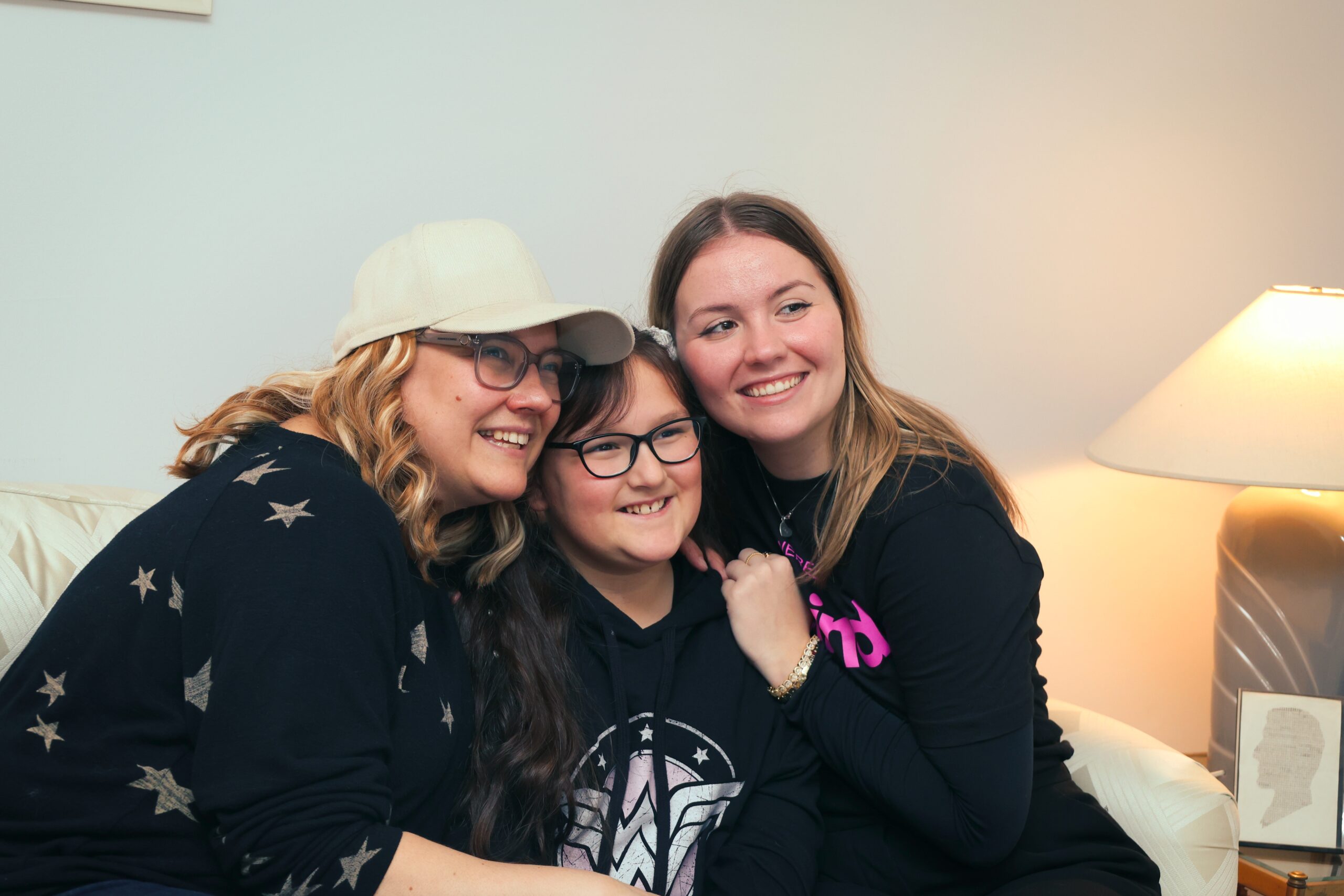
How in-home support helps the whole family when a parent has cancer
For most people going through cancer treatment, the hospital is not the only place where the experience actually happens. The hospital is for appointments, treatment, surgeries, and scans. Everything else happens at home. The mornings after a hard infusion. The evenings when fatigue has set in and there are still children who need dinner. The days when getting out of bed to make school lunches is a genuine physical challenge.
This is where in-home cancer care makes its real difference. The benefits of in-home cancer patient care are emotional and practical, and they extend beyond the patient to the entire household. Nankind is one of the few organizations in Canada offering free in-home support specifically for parents with cancer. Trained Volunteer Angels come to the home each week to care for children while parents rest, attend appointments, or simply have time to heal.
What Does In-Home Cancer Care Include?
The term “in-home care” means something different depending on who is using it. For some people it means a nurse coming to manage a wound or administer IV medication. For others it means a personal support worker helping with bathing or mobility. For others still it means someone to sit with the children so a parent can sleep.
The full spectrum includes:
- Medical home care: Nursing, wound care, IV medications, and palliative support delivered at home.
- Personal support workers: Help with bathing, dressing, and mobility.
- Mental health and psychosocial support: Social workers and counsellors who work with patients and families in their home environment.
- Childcare and family support: Trained volunteers or paid caregivers who support children while a parent is in treatment or recovery.
- Practical household support: Meal preparation, housekeeping, errands, and logistics.
Most patients need more of this than they are currently getting. The barrier is usually not cost or eligibility but awareness.
Who Can Access In-Home Cancer Care Support in Ontario?
In Ontario, publicly funded medical home care is accessed through Ontario Health at Home. The entry point is a referral from your oncologist or nurse navigator. Most hospital oncology teams have a home care coordinator. If you have not been connected to one, ask directly.
You do not need to be in palliative care to qualify. In-home support is available across all stages of treatment. Many programs have waitlists, and registering early gives you the best chance of having support in place when treatment is hardest.
Community and nonprofit programs like Nankind operate alongside the public system with their own eligibility criteria. These free support programs often fill gaps that publicly funded care does not cover, particularly around family and childcare support, for families across the GTA, Barrie, Hamilton, and Kingston.
What Are the Medical Benefits of In-Home Cancer Care?
Better treatment adherence. Patients who are well-supported at home are more likely to complete their full treatment protocol. Fatigue, logistical overwhelm, and the compounding difficulty of managing a household while undergoing treatment are among the leading reasons people miss appointments or discontinue treatment prematurely. Home support, even when it is not medical, removes barriers. A parent who does not have to worry about childcare during a Tuesday infusion is a parent who goes to the infusion. A parent whose household is functioning at a basic level is a parent with slightly more capacity to manage treatment.
Independence, dignity, and a sense of control. One of the things cancer takes is the feeling of control. Treatment schedules, side effects, and the loss of ordinary function compound into a sense that your life is no longer your own. This is one of the most overlooked costs of the illness, and it is one that in-home care is uniquely positioned to address. When support comes to you rather than requiring you to go somewhere else, your daily routine stays closer to intact. You make your own choices about the hours that are yours. You receive help only where you need it and remain autonomous everywhere else. For parents especially, being at home means being present for your children in small ways even on difficult days. That presence is not incidental to recovery. It is part of it.
How Does In-Home Care Impact Family Routines?
Children need routine, especially when everything else is uncertain
Research on children and parental illness consistently shows that predictable routine is one of the most protective factors available to a child navigating a parent’s cancer. When a parent is sick, the loss of structure is often the first thing children feel, before they have language for the fear underneath it.
The bedtime ritual, the school pickup, the Saturday morning pattern: these seem ordinary until they are disrupted. For children, ordinary is the thing that tells them the world is still holding. When the ordinary disappears, anxiety can move in.
What disrupted routine looks like in children
The signs of disrupted routine in children during a parent’s illness are worth naming explicitly, because they are easy to misread. Younger children act out rather than articulate. Sleep problems, separation anxiety, regression in behaviour, clinginess that was not there before. Older children often go the other direction: they go quiet, they try to be helpful in ways that are not appropriate for their age, they take on worry that should belong to adults.
None of this is pathological. It is a normal response to an abnormal situation. But it does require attention, and it does benefit from stability wherever that stability can be created.
How in-home support stabilizes routines
A consistent weekly visitor restores predictability. Children know who is coming and can have something to look forward to that includes play and fun activities. They know when and what they might do together. That rhythm, created and maintained by a Volunteer Angel arriving at the same time each week, is not a small intervention. For a child whose world has been upended, it is a reliable anchor.
Nankind’s free Volunteer Angels do not simply show up and play. They are trained by Psychosocial Support Specialists, and they arrive with activities that build resilience and coping skills alongside the fun. The I-Spy Bottle, Worry Monster art activities, outdoor games are not random. They are designed to give children tools for managing the big feelings they are carrying without having to name them directly.
Stephanie, a Nankind mom, described what this looked like in her family “The time she spends with our children provides them with the play and cuddles that I’m not physically able to provide at the moment; for that alone, I’m beyond grateful. They feel loved and can play as children should be able to play.”
How Does In-Home Care Support Mental Health?
The psychological cost of isolation. Cancer treatment is isolating. It pulls people out of their routines, out of their workplaces, out of their social networks. When treatment is combined with home confinement, the isolation compounds. The research on social support and cancer outcomes consistently shows that patients who have regular, meaningful human interaction report lower rates of depression and anxiety. This does not require clinical intervention. The presence of another person, someone who shows up, who pays attention, who is reliably there, is itself therapeutic.
Varun, whose family received free Volunteer Angel support through Nankind, described it this way “You have been more than just an organization, you have become family. Your support, volunteer care, and warmth have lifted our spirits and reminded us that we are not alone.”
The caregiver’s mental health. In-home support benefits the caregiving partner as much as it benefits the patient. Partners and spouses of cancer patients are at significantly elevated risk for burnout, depression, and anxiety. The added demands of providing emotional support, managing household logistics, parenting, and navigating an uncertain future without a support system designed for them takes a serious toll. Even a few hours of reliable in-home childcare per week can prevent a caregiver from hitting a wall. Knowing that the children are cared for, consistently and well, is a form of relief that compounds over time.
What psychosocial in-home support actually looks like. When psychosocial support happens in the home rather than in a clinical office, it can reach the whole family rather than just the patient. A social worker visiting at home sees the family dynamics in context. They can work with a parent to find the right language for their children. They can observe how a child is responding to what is happening and address it directly in the child’s own environment. Nankind’s Volunteer Angels are trained by Psychosocial Support Specialists and arrive equipped with Coping Kits: hands-on tools that help children process and express what they are carrying.
What Does In-Home Help Actually Free Up?
Time and energy for recovery. Every task a parent does not have to do is energy returned to healing. The cognitive and physical load of managing a household during treatment actively competes with the body’s recovery capacity. Sleep, appetite, the ability to stay present with your children during the good hours, all of these improve when the burden of daily logistics is partially lifted.
Meal support. Cooking during treatment is genuinely difficult. The mental load of planning, the physical effort of standing and preparing, the immune considerations around grocery shopping: combined, they add up to something many parents simply cannot manage. Nankind’s free Meal Support Program delivers prepared, nutritious meals five nights a week, free of charge, to eligible families across the GTA, Barrie, Hamilton, and Kingston. For families trying to hold a household together through treatment, this is one of the most tangible daily differences that in-home support creates.
Homework and academic support. Children’s school performance can be affected during a parent’s cancer journey. The combination of anxiety, disrupted routine, and reduced parental capacity to help with schoolwork creates a gap that, left unaddressed, can grow into larger academic difficulties. Most families do not know that free virtual homework support is available as part of in-home care. Nankind’s free Homework Club pairs children with a Homework Angel for two free hours of one-on-one virtual academic support each week. The Homework Angel helps with assignments, builds a routine around learning, and provides an engaged, encouraging presence at a time when that combination is particularly valuable.
How Can You Access In-Home Cancer Care in Ontario?
Talk to your oncologist, nurse navigator, or hospital social worker. Most cancer centres have home care coordinators whose job is to connect patients with available support. If you have not been offered this, ask for it directly.
For publicly funded medical home care, Ontario Health at Home is the provincial access point. Coverage varies by region and by need, and there are waitlists for some services.
Look beyond the medical system. Community organizations often provide forms of support that public funding does not cover: childcare, peer support, meal programs, children’s programming. These are the gaps where Nankind operates.
You Don’t Have to Carry This Alone
For parents with cancer, in-home support may be what makes it possible to complete treatment. Not because of any single intervention, but because the cumulative weight of managing a household, parenting, and recovering from treatment is simply too much to carry alone.
You do not have to carry it alone. If you are a parent living with cancer in Ontario and you need free support at home, register with Nankind today. Every program is free of charge.
Frequently Asked Questions
Is in-home cancer care free in Ontario? Publicly funded medical home care through Ontario Health at Home is free but often has waitlists and covers medical needs only. Nonprofit programs like Nankind offer free, non-medical in-home support like in-home childcare, meals, and academic help for parents with cancer, regardless of income.
Who qualifies for Nankind’s in-home support? Nankind supports parents with a cancer diagnosis who have children at home, across the GTA, Barrie, Hamilton, and Kingston. Support is available at every stage of treatment, not just palliative care, and is offered regardless of income or where a family is in their journey.
What is the difference between medical home care and Nankind’s support? Medical home care covers nursing, wound care, and IV medications, and is accessed through Ontario Health at Home. Nankind’s support is non-medical. Trained Volunteer Angels provide free childcare, Homework Angels provide free academic support, and the free Meal Support Program delivers prepared meals, filling the gaps that publicly funded care does not cover.
How do I register for Nankind’s programs? Families can register directly with Nankind online here. No referral is required, and every program is free of charge.
Does in-home support help children, or just the parent with cancer? Both. Nankind’s free In-home support restores routine and predictability for children, which research links to lower anxiety during a parent’s illness, while also giving the parent time to rest, attend appointments, and heal, knowing their children are being cared for.
Resources
- Nankind: free in-home Volunteer Angels who visit weekly to provide childcare for your kids, a free Meal Support Program that delivers prepared dinners five nights a week, a free virtual Homework Club pairing children with academic volunteer support, free Peer Support groups for children and parents, and free Psychosocial Support Specialist counselling sessions. Every program is free for parents with cancer in Ontario.
- Ontario Health at Home: publicly funded home care in Ontario.
- Canadian Home Care Association: offers information on accessing publicly funded and private home care services nationally.
- Wellspring: community-based cancer support programs.
- Canadian Cancer Society: cancer.ca or 1-888-939-3333.